

Why Wine Grapes Thrive Along Lake Michigan
- Third Coast Ride Co

- May 23
- 3 min read
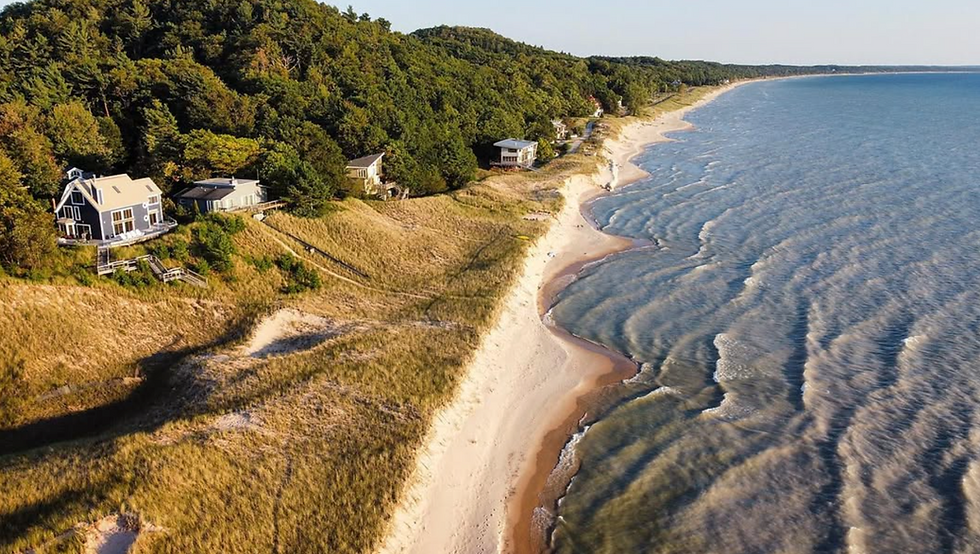
Southwest Michigan may surprise first-time visitors with its growing reputation as one of the Midwest’s premier wine regions. Stretching along the shoreline of Lake Michigan, the area has become home to rolling vineyards, award-winning wineries, and a climate uniquely suited for producing exceptional wine grapes. But what exactly makes this region so ideal for winemaking?
The answer lies largely in the powerful influence of Lake Michigan itself.
The “Lake Effect” Creates the Perfect Climate
One of the biggest challenges for growing wine grapes is temperature. Grapevines are sensitive plants that require a delicate balance between warm growing seasons and protection from extreme winter cold. That’s where Lake Michigan plays a major role.
Because the lake holds heat longer than the surrounding land, it acts as a natural temperature regulator throughout the year. During the winter months, Lake Michigan releases stored warmth that helps moderate freezing temperatures near the shoreline. This reduces the risk of severe winter damage to vineyards and helps grapevines survive colder Michigan winters.
In the summer, the lake has the opposite effect—cooling the surrounding areas and preventing excessive heat stress on the grapes. This creates a longer, slower growing season that allows grapes to develop more balanced flavors, acidity, and complexity.
This unique climate phenomenon is often referred to as the “lake effect,” and it’s one of the primary reasons Southwest Michigan has become such a successful wine-producing region.
Longer Growing Seasons Mean Better Grapes
Great wine often comes from grapes that have had time to mature gradually rather than too quickly. The moderated temperatures around Lake Michigan extend the growing season into the fall, giving grapes additional time to ripen fully while maintaining their natural acidity.
That balance is incredibly important in winemaking. It helps produce wines that feel fresh, vibrant, and layered rather than overly sweet or flat.
Many of the wines produced in Southwest Michigan are known for their crisp character, bright fruit notes, and food-friendly balance—qualities that are directly influenced by the region’s extended growing conditions.
Soil Matters Too
The landscape surrounding Lake Michigan was shaped thousands of years ago by glaciers, leaving behind sandy, well-draining soils that are excellent for vineyards.
Grapevines actually perform better when they have to work a little harder. Well-drained soil prevents excess water from collecting around the roots, encouraging vines to grow deeper and produce more concentrated fruit.
Combined with rolling hills and good airflow throughout the vineyards, these conditions create an ideal environment for healthy grape production.
A Region Inspired by European Wine Areas
Interestingly, Southwest Michigan shares similarities with several well-known European wine regions. The combination of latitude, lake influence, and seasonal moderation creates conditions comparable to areas in France and Germany that are also known for cool-climate wines.
That’s why grapes like Riesling, Pinot Noir, Chardonnay, Sauvignon Blanc, and Cabernet Franc tend to thrive here. These varieties benefit from cooler temperatures and longer ripening periods that help preserve nuance and complexity.
More Than Agriculture—It’s an Experience
Part of what makes Southwest Michigan wine country so special is how closely the vineyards connect with the surrounding lifestyle. Scenic countryside roads, lake views, charming towns, and relaxed tasting experiences all contribute to the region’s growing popularity.
Visitors can spend the day exploring vineyards, enjoying outdoor patios, taking in sunset views over Lake Michigan, and discovering wineries that blend agriculture, hospitality, and local craftsmanship.
The wine itself may begin with climate and soil, but the overall experience is shaped by the region’s slower pace and welcoming atmosphere.
A Wine Region Still Growing
Southwest Michigan’s wine industry continues to evolve every year, with new vineyards, innovative winemakers, and expanding tasting experiences helping introduce more people to the region.
What was once considered a hidden gem is quickly becoming one of the country’s most exciting cool-climate wine destinations—and Lake Michigan remains at the heart of it all.
From the moderating lake breezes to the fertile soils and scenic countryside, the conditions along Michigan’s shoreline create far more than just good grapes. They create a wine region with a character entirely its own.


Comments